Era 6 · The First KingsProverbs
Proverbs 30: The Words of Agur
A weary man's questions, two requests, and numbered wonders from the leech to the lizard
"The words of Agur the son of Jakeh, even the prophecy (massa): the man spake unto Ithiel, even unto Ithiel and Ucal" (30:1). The opening is one of the hardest lines in the Bible to translate.
"Who hath ascended up into heaven, or descended? who hath gathered the wind in his fists? who hath bound the waters in a garment? who hath established all the ends of the earth? what is his name, and what is his son's name, if thou canst tell?" (30:4).
"Two things have I required of thee; deny me them not before I die: remove far from me vanity and lies: give me neither poverty nor riches; feed me with food convenient for me: lest I be full, and deny thee… or lest I be poor, and steal" (30:7–9).
"There be four things which are little upon the earth, but they are exceeding wise: the ants are a people not strong, yet they prepare their meat in the summer; the conies are but a feeble folk, yet make they their houses in the rocks; the locusts have no king, yet go they forth all of them by bands; the spider (lizard) taketh hold with her hands, and is in kings' palaces" (30:24–28).
The small and wise creatures
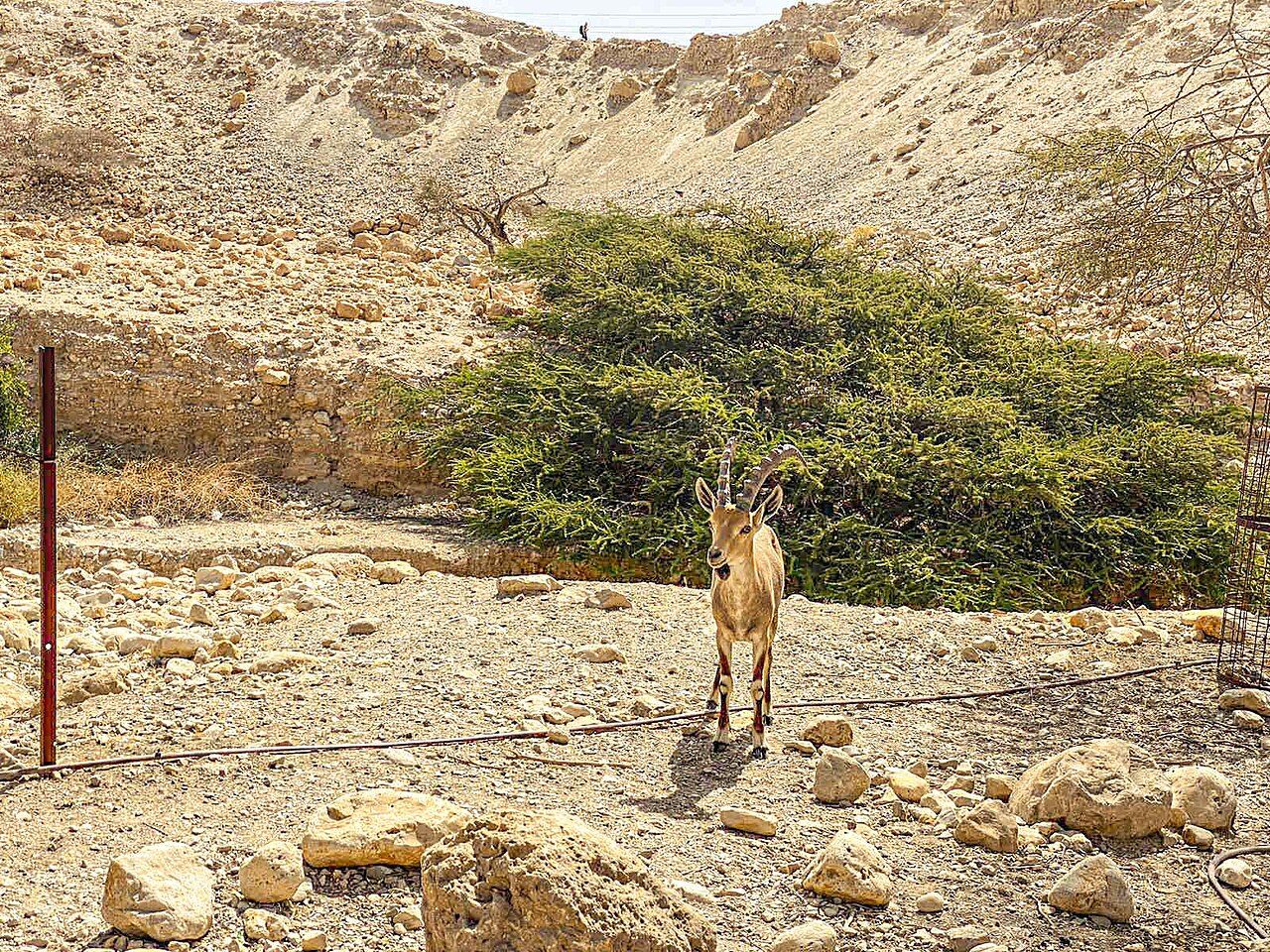
Ants (nemalim) store food (compare 6:6–8). Conies (shefannim) are rock hyraxes, small mammals that live in rocky cliffs from Sinai to Galilee (Psalm 104:18); the image above is of an ibex, their neighbour on the cliffs. Locusts (arbeh) move in swarms without a ruler (compare Joel 2:7–8). The semamit (KJV "spider") is most likely a gecko or lizard, which clings to walls with its "hands" and gets into palaces. Each creature lacks strength or status but has wisdom: foresight, refuge, cooperation, persistence.
Numerical sayings
"Three things… yea, four" (vv. 15, 18, 21, 29) is the X / X+1 pattern of 6:16–19, known from Ugaritic poetry and Amos 1–2. Here the lists invite wonder and humour: the leech with two daughters crying "Give, give"; four insatiable things (Sheol, the barren womb, dry earth, fire); four mysterious ways that leave no trace.
| Verse | The saying | Form | What to notice |
|---|---|---|---|
| 30:1 | The words of Agur the son of Jakeh | Heading | See the passage page: Ithiel and Ucal, or "I am weary, O God" |
| 30:2 | Surely I am more brutish than any man | Confession | Ironic humility, like Job 42:3 |
| 30:3 | I neither learned wisdom, nor have the knowledge of the holy | Confession | "The Holy One" (qedoshim), as 9:10 |
| 30:4 | Who hath ascended up into heaven, or descended? | Questions | Compare Job 38; Deuteronomy 30:12; Isaiah 40:12; later John 3:13 |
| 30:5 | Every word of God is pure | Affirmation | Almost a quotation of Psalm 18:30 / 2 Samuel 22:31 |
| 30:6 | Add thou not unto his words | Instruction | Compare Deuteronomy 4:2; 12:32; Revelation 22:18 |
| 30:7 | Two things have I required of thee | Prayer | The only prayer in Proverbs |
| 30:8 | Give me neither poverty nor riches | Prayer | "Food convenient": my allotted bread (compare Matthew 6:11) |
| 30:9 | Lest I be full, and deny thee | Prayer | Both extremes endanger faith |
| 30:10 | Accuse not a servant unto his master | Instruction | Do not slander a slave; compare Deuteronomy 23:15 |
| 30:11 | There is a generation that curseth their father | List (vv. 11–14) | Four kinds of people, each line beginning "a generation" |
| 30:12 | There is a generation that are pure in their own eyes | List | Self-righteous and unwashed |
| 30:13 | There is a generation, O how lofty are their eyes! | List | Arrogance |
| 30:14 | Whose teeth are as swords | List | Devouring the poor |
| 30:15 | The horseleach hath two daughters, crying, Give, give | Numerical | Aluqah, the leech; three and four insatiable things |
| 30:16 | The grave; and the barren womb | Numerical | Sheol, womb, dry earth, fire |
| 30:17 | The eye that mocketh at his father | Instruction | Ravens and vultures (nesher) will eat it |
| 30:18 | There be three things which are too wonderful for me | Numerical | Four ways that leave no trace |
| 30:19 | The way of an eagle in the air | Numerical | Eagle, snake, ship, a man with an almah (young woman) |
| 30:20 | Such is the way of an adulterous woman | Comparison | She "wipes her mouth": no trace either |
| 30:21 | For three things the earth is disquieted | Numerical | Four social upheavals |
| 30:22 | For a servant when he reigneth | Numerical | Compare 19:10; Ecclesiastes 10:7 |
| 30:23 | An odious woman when she is married | Numerical | A rival maidservant who supplants her mistress (compare Hagar, Genesis 16) |
| 30:24 | There be four things which are little upon the earth | Numerical | Small but wise |
| 30:25 | The ants are a people not strong | Numerical | Foresight |
| 30:26 | The conies are but a feeble folk | Numerical | Rock hyraxes: refuge in the rocks |
| 30:27 | The locusts have no king | Numerical | Order without a ruler |
| 30:28 | The spider taketh hold with her hands | Numerical | Semamit: probably a gecko |
| 30:29 | There be three things which go well | Numerical | Four with a stately stride |
| 30:30 | A lion which is strongest among beasts | Numerical | Lions lived in the Jordan thickets (Jeremiah 49:19) |
| 30:31 | A greyhound; an he goat also; and a king | Numerical | Zarzir motnayim: "girded of loins," a rooster or war-horse; the Greek reads "a rooster walking proudly among hens"; the last phrase is obscure |
| 30:32 | If thou hast done foolishly in lifting up thyself | Instruction | Hand over mouth: stop |
| 30:33 | Surely the churning of milk bringeth forth butter | Comparison | Wordplay: af (nose) and appayim (anger): pressing anger produces strife |
Who was Agur?
Agur son of Jakeh is otherwise unknown. Massa may mean "oracle, burden" (as in Isaiah 13:1) or be the name of a north Arabian tribe descended from Ishmael (Genesis 25:14); if so, Agur and Lemuel (31:1) were non-Israelite sages, which would fit the international character of wisdom (1 Kings 4:30–31 compares Solomon with the wise men of the east). Jewish tradition identified Agur with Solomon (Agur = "gatherer," Jakeh = "obedient"); that is a later interpretation. See the passage page on 30:1.
30:4 and later reception
"Who hath ascended up into heaven, or descended?… what is his name, and what is his son's name?" In context the questions show human ignorance before God's works, like God's questions to Job. Christian interpreters from the early church on read "his son's name" as a pointer to Christ; John 3:13 ("no man hath ascended up to heaven, but he that came down from heaven") echoes the language. Jewish readers have taken "his son" as Israel (Exodus 4:22). These are later readings; the site records them as such.
The Greek order
In the Old Greek, 30:1–14 follows 24:22, and 30:15–33 follows 24:34; Agur's name is not given (the Greek reads "My son, fear my words…"). The library's digital Greek stores chapter 30 in its Hebrew place but with empty slots (30:15–22) and duplicated lines from 24:23–25 (D check; C check against Rahlfs).
What the evidence shows
- Agur son of Jakeh is known only from Proverbs 30:1.
- Massa in 30:1 and 31:1 is an Arabian tribe. Or 'oracle'; both are argued.
- Agur was another name of Solomon. A later Jewish tradition.
- The shefannim of 30:26 are rock hyraxes.
- The library's Greek does not name Agur.Source: The site's library: Westminster Leningrad Codex, KJV, Clementine Vulgate, Giguet's French of the Greek
Continue the journey
Journey of a PassageProverbs 30:1: Agur, Ithiel and Ucal, or "I am weary, O God""The words of Agur the son of Jakeh, the massa: the man said to Ithiel, to Ithiel and Ucal." Read as names, the line introduces a sage and two hearers.More from this lesson
Why this matters to the rest of Scripture
- God's questions about creation.
- "The word of the LORD is tried."
- "Give us this day our daily bread."
- "No man hath ascended up to heaven."