Era 6 · The First KingsProverbs
Proverbs 25: Copied Out by the Men of Hezekiah
A royal collection, apples of gold, the faithful messenger, and coals of fire
"These are also proverbs of Solomon, which the men of Hezekiah king of Judah copied out" (25:1). The verb he'tiqu means "transferred, moved, copied": scribes at Hezekiah's court (late 8th – early 7th century BC) gathered or transcribed these sayings.
"It is the glory of God to conceal a thing: but the honour of kings is to search out a matter" (25:2).
"A word fitly spoken is like apples of gold in pictures (settings) of silver" (25:11). "As cold waters to a thirsty soul, so is good news from a far country" (25:25).
"If thine enemy be hungry, give him bread to eat; and if he be thirsty, give him water to drink: for thou shalt heap coals of fire upon his head, and the LORD shall reward thee" (25:21–22).
Hezekiah's court and its scribes
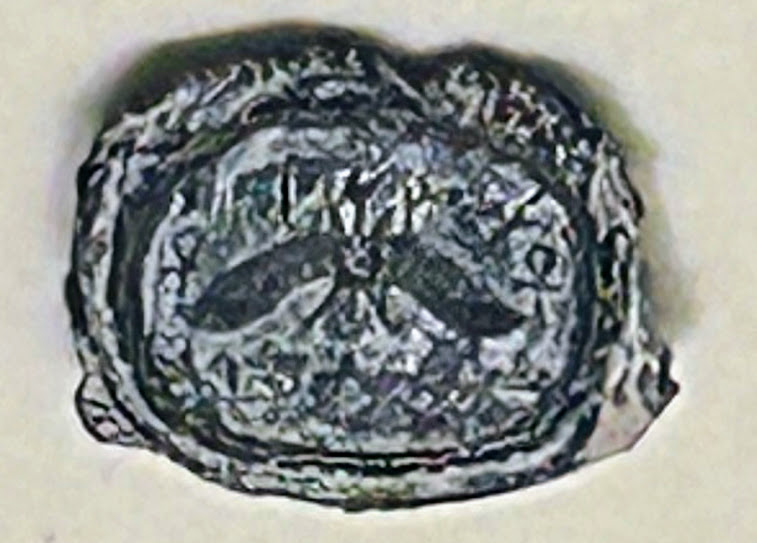
Hezekiah (reigned c. 715–686 BC) is one of the best-attested kings of Judah: his name appears on royal seal impressions (bullae) from Jerusalem, on Sennacherib's annals (701 BC), and possibly in the Siloam Tunnel project. Seals and bullae of officials ("servant of Hezekiah"), the growth of Jerusalem, and the spread of writing in late 8th-century Judah all point to an active royal administration with scribes. Kings and Chronicles present him as a reformer (2 Kings 18; 2 Chronicles 29–31) and Isaiah's contemporary. This context makes a literary project at his court plausible; no inscription names "the men of Hezekiah" or mentions Proverbs.
Comparisons from nature
Chapters 25–27 favour comparison sayings ("As X, so Y"), often without a verb: "Clouds and wind without rain: a man who boasts of a gift he does not give" (25:14). Snow carried down from Hermon to cool drinks at harvest (25:13), the north wind and rain (25:23), a city without walls (25:28): the images are drawn from the land.
| Verse | The saying | Form | What to notice |
|---|---|---|---|
| 25:1 | These are also proverbs of Solomon… copied out | Heading | The men of Hezekiah: see the passage page |
| 25:2 | It is the glory of God to conceal a thing | Antithetic | God hides, kings search: the royal task of investigation |
| 25:3 | The heaven for height, and the earth for depth | Comparison | The king's heart is unsearchable |
| 25:4 | Take away the dross from the silver | Comparison (with v. 5) | Refining as purging the court |
| 25:5 | Take away the wicked from before the king | Comparison | The throne established in righteousness |
| 25:6 | Put not forth thyself in the presence of the king | Instruction | Do not take the place of the great |
| 25:7 | Better it is that it be said unto thee, Come up hither | Comparative | Jesus' parable of the wedding seats (Luke 14:8–11) teaches the same |
| 25:8 | Go not forth hastily to strive | Instruction | Rushing to court |
| 25:9 | Debate thy cause with thy neighbour himself | Instruction | Settle privately; do not reveal another's secret |
| 25:10 | Lest he that heareth it put thee to shame | Instruction | Reputation for discretion |
| 25:11 | A word fitly spoken is like apples of gold | Comparison | Gold fruit in silver settings: jewellery or carved ornament; tappuach may be apricot or apple |
| 25:12 | As an earring of gold… so is a wise reprover | Comparison | Reproof received as an ornament |
| 25:13 | As the cold of snow in the time of harvest | Comparison | Snow-cooled drinks, not a snowfall (which would ruin the harvest, 26:1) |
| 25:14 | Clouds and wind without rain | Comparison | Empty promises |
| 25:15 | A soft tongue breaketh the bone | Synonymous | Patience persuades rulers |
| 25:16 | Hast thou found honey? eat so much as is sufficient | Instruction | Moderation; compare v. 27 |
| 25:17 | Withdraw thy foot from thy neighbour's house | Instruction | Do not overstay your welcome |
| 25:18 | A man that beareth false witness… is a maul, and a sword | Comparison | Club, sword, arrow |
| 25:19 | Confidence in an unfaithful man… is like a broken tooth | Comparison | And a lame foot |
| 25:20 | As vinegar upon nitre | Comparison | Natron (soda) fizzing in vinegar: singing to a heavy heart is that inappropriate |
| 25:21 | If thine enemy be hungry, give him bread | Instruction | Romans 12:20 quotes 25:21–22 |
| 25:22 | Thou shalt heap coals of fire upon his head | Instruction | See the passage page |
| 25:23 | The north wind driveth away rain | Comparison | In Judah rain usually comes from the west; the Hebrew tsafon may mean "hidden" wind, or the saying reflects another region |
| 25:24 | It is better to dwell in the corner of the housetop | Comparative | = 21:9 |
| 25:25 | As cold waters to a thirsty soul | Comparison | Good news from afar |
| 25:26 | A righteous man falling down before the wicked | Comparison | A muddied spring |
| 25:27 | It is not good to eat much honey | Comparison | Second line obscure: seeking one's own glory is no glory |
| 25:28 | He that hath no rule over his own spirit | Comparison | A city without walls; compare 16:32 |
What 25:1 establishes
25:1 is a literary claim inside the book: that a collection of Solomonic sayings was transcribed or edited by Hezekiah's scribes. It is the clearest internal evidence that Proverbs was compiled in stages, and it suggests that at least chapters 25–29 existed as a collection by about 700 BC. It does not date the final book, and it is not independent archaeological confirmation. The library's Greek reads "the unclassified (adiakritoi) sayings of Solomon, which the friends of Hezekiah king of Judea transcribed": the Greek understood the collection as miscellaneous sayings set aside earlier. See the passage page.
Coals of fire (25:22)
Several explanations: (1) shame and remorse that burn the enemy and lead to repentance (Augustine, Jerome; most modern readers); (2) an Egyptian penitential rite in which a person carried a dish of burning coals on the head as a sign of contrition (S. Morenz, from a Late Egyptian text; disputed); (3) punishment from God, the kindness making the enemy's guilt worse. Paul quotes the verse (Romans 12:20) and adds "Be not overcome of evil, but overcome evil with good," which favours the first. See the passage page.
The Greek collection order
In the Old Greek, chapters 25–29 come after 31:1–9 and before 31:10–31. The library's digital Greek stores them in Hebrew chapter slots 25–29, but its verse numbers do not line up with the Hebrew, and part of chapter 29 spills into its "chapter 31" (D check).
What the evidence shows
- Proverbs 25:1 credits the men of Hezekiah with copying Solomonic proverbs.
- Hezekiah's name appears on royal bullae and in Sennacherib's annals.
- Hezekiah's scribes compiled chapters 25–29. The book's own claim; no external record of the project.
- 'Coals of fire' refers to an Egyptian penitential rite.
- Romans 12:20 quotes Proverbs 25:21–22.
Continue the journey
Journey of a PassageProverbs 25:1: "Copied out by the men of Hezekiah""These are also proverbs of Solomon, which the men of Hezekiah king of Judah copied out (he'tiqu)." The only editorial note in Proverbs that names a later king.More from this lesson
Why this matters to the rest of Scripture
- Hezekiah's reign and reform.
- "Heap coals of fire on his head."
- "Friend, go up higher."