Era 6 · The First KingsProverbs
Investigation: Was Wisdom "Created"?
Proverbs 8:22–31 from Hebrew poem to Greek text to the Council of Nicaea
"The LORD possessed me (qanani) in the beginning of his way, before his works of old. I was set up from everlasting… When there were no depths, I was brought forth… Then I was by him, as one brought up with him (amon): and I was daily his delight, rejoicing always before him" (8:22–30).
Around 180 BC Ben Sira wrote: "Before the world, from the beginning, he created me" (Sirach 24:9), and identified Wisdom with "the book of the covenant of the Most High God, the law which Moses commanded" (24:23). The Wisdom of Solomon calls Wisdom "a breath of the power of God… a reflection of eternal light" (7:25–26). The prologue of John: "In the beginning was the Word… All things were made by him" (1:1–3).
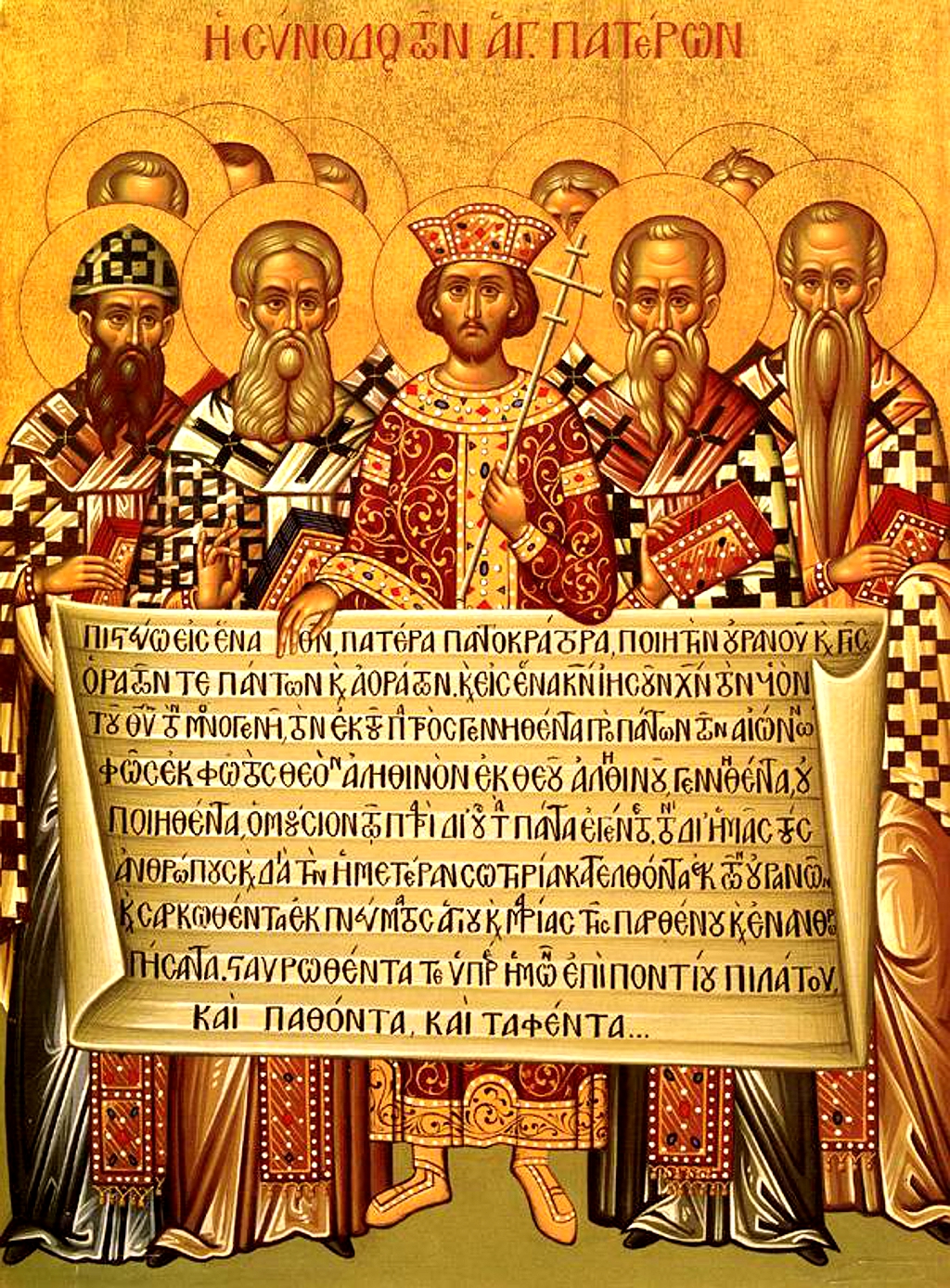
In AD 318–325 Arius, a priest of Alexandria, argued from the Greek of 8:22 ("the Lord created me") that the Son of God, identified with Wisdom, was the first and highest creature: "there was when he was not." His opponents, led by Alexander and later Athanasius, answered that the Son is eternally begotten, not made. The Council of Nicaea (325) declared the Son "begotten, not made, of one substance with the Father."
| Level | Text | What "Wisdom" is | Status |
|---|---|---|---|
| Hebrew poem (Proverbs 8) | qanani: acquired / created / begot | Personified divine wisdom, present at creation | The text |
| Greek translation | ektisen: created | The same figure, in Greek words | Translation choice |
| Second Temple Judaism | Sirach 24; Wisdom 7–9; Baruch 3:9–4:4 | Wisdom = Torah; Wisdom as emanation of God | Later interpretation |
| Rabbinic Judaism | Genesis Rabbah 1:1 (amon = craftsman) | Torah as God's blueprint for creation | Later interpretation |
| New Testament | John 1; Colossians 1:15–17; Hebrews 1:2–3; 1 Corinthians 1:24 | Christ described in Wisdom's language | Christian reading |
| 4th-century debate | Arius; Athanasius, Orations II | Is the Son a creature? | Doctrinal controversy |
The Hebrew
Qanah usually means "acquire," but in poetry can mean "create" or "beget" (Genesis 14:19, 22; Deuteronomy 32:6; Psalm 139:13); the parallels in 8:23–25 ("set up/woven," "brought forth" as in birth) favour coming into being. Read as a poem, 8:22–31 says that wisdom is older than the world and that the world was made with it. It does not discuss whether Wisdom is a distinct divine person; that question belongs to later readers.
Arius and Athanasius
Arius took the Greek ektisen literally: Wisdom/the Son was created "before the ages." Athanasius (Orations against the Arians II.44–82) argued that "created" refers to the Son's incarnation (his becoming the "beginning of the ways" in human flesh) and that "begotten" in 8:25 refers to his eternal generation. Others (Eusebius of Caesarea) took intermediate positions. Both sides used the same Greek text; the dispute was about interpretation.
Translation after Nicaea
Jerome's Latin (c. 398) rendered qanani as possedit me ("possessed me"), following the 2nd-century Jewish Greek revisers (Aquila, Symmachus, Theodotion: ektēsato, "acquired"). The KJV followed with "possessed." Modern translations divide: "created" (NRSV, NJPS), "brought me forth" (NIV), "possessed" (KJV, NASB 1995). Each choice is a judgment about Hebrew, not a doctrinal verdict in itself.
Faith and history
Christians who read Proverbs 8 as speaking of Christ do so through the New Testament and the creeds; Jewish readers read it of Torah; historical scholars read it of personified wisdom. The site shows all three and the evidence for each, without making the poem's original meaning depend on the later debate or the later faith depend on the original poem.
What the evidence shows
- The Greek of Proverbs 8:22 reads 'created me.'Source: The site's library: Westminster Leningrad Codex, KJV, Clementine Vulgate, Giguet's French of the Greek
- Arius used Proverbs 8:22 to argue that the Son was created.Source: Athanasius, Orations against the Arians II (on Proverbs 8:22)
- Sirach 24 identifies Wisdom with the Torah.Source: Sirach (Ecclesiasticus) 24; Wisdom of Solomon 7–9
- Proverbs 8 speaks of the second person of the Trinity. A Christian reading.
- Qanah in 8:22 means 'created.'
Continue the journey
Journey of a PassageProverbs 8:22: "The LORD possessed me" or "created me"Wisdom says: "YHWH qanani at the beginning of his way." Qanani can mean "acquired me," "possessed me," "created me" or "begot me." The library's Greek reads "The Lord created me" (Giguet "m'a créée"; Greek ektisen).More from this lesson
Why this matters to the rest of Scripture
- "In the beginning was the Word."
- "The firstborn of every creature."
- "Christ the power of God, and the wisdom of God."