Era 6 · The First KingsProverbs
Proverbs 18: Death and Life Are in the Power of the Tongue
Deep waters, gossip's tasty morsels, a strong tower and a friend closer than a brother
"The name of the LORD is a strong tower: the righteous runneth into it, and is safe. The rich man's wealth is his strong city, and as an high wall in his own conceit" (18:10–11). Two refuges side by side: one real, one imagined.
"He that answereth a matter before he heareth it, it is folly and shame unto him" (18:13). "He that is first in his own cause seemeth just; but his neighbour cometh and searcheth him" (18:17).
"Death and life are in the power of the tongue: and they that love it shall eat the fruit thereof" (18:21).
"Whoso findeth a wife findeth a good thing, and obtaineth favour of the LORD" (18:22). "A man that hath friends must shew himself friendly: and there is a friend that sticketh closer than a brother" (18:24).
Towers and walls
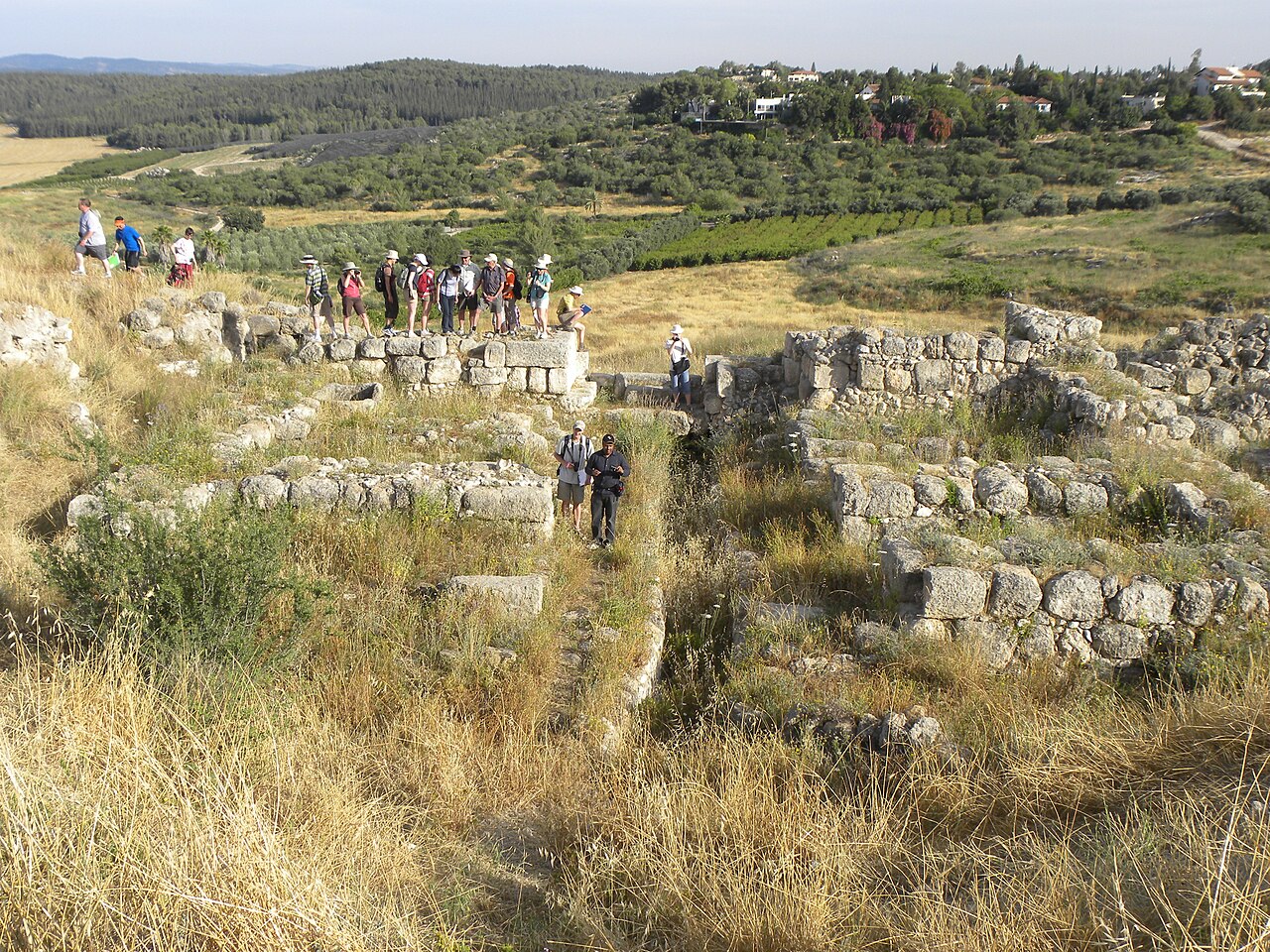
Iron Age cities in Judah and Israel were walled, with towers at gates and corners; Lachish, Megiddo and Tel en-Nasbeh show massive fortifications. A "strong tower" (migdal oz) was the last refuge in a siege (Judges 9:51). 18:10–11 contrasts trust in God's name with the rich man's imagined wall: 10:15 had said wealth is a strong city; 18:11 adds "in his own conceit." Read together, the two sayings show Proverbs correcting one observation with another.
| Verse | The saying | Form | What to notice |
|---|---|---|---|
| 18:1 | Through desire a man, having separated himself | Synthetic | The Hebrew is difficult: the self-isolating person pursues his own desire and rejects sound counsel |
| 18:2 | A fool hath no delight in understanding | Antithetic | He only wants to air his opinions |
| 18:3 | When the wicked cometh, then cometh also contempt | Synonymous | Wickedness brings disgrace |
| 18:4 | The words of a man's mouth are as deep waters | Synonymous or antithetic | Deep waters may be profound or obscure; the "flowing brook" of wisdom is clear |
| 18:5 | It is not good to accept the person of the wicked | Synthetic | Partiality in court; compare 24:23 |
| 18:6 | A fool's lips enter into contention | Synonymous | His mouth invites a beating |
| 18:7 | A fool's mouth is his destruction | Synonymous | Trapped by his own words |
| 18:8 | The words of a talebearer are as wounds | Synthetic | Mitlahamim: "tasty morsels," not "wounds" (KJV); repeated word for word in 26:22 |
| 18:9 | He also that is slothful in his work is brother to him that is a great waster | Synthetic | Neglect is as costly as destruction |
| 18:10 | The name of the LORD is a strong tower | Synthetic | Refuge in God's name; compare Psalm 61:3 |
| 18:11 | The rich man's wealth is his strong city | Synthetic | "In his own conceit": corrects 10:15 |
| 18:12 | Before destruction the heart of man is haughty | Antithetic | Second line = 15:33b |
| 18:13 | He that answereth a matter before he heareth it | Synthetic | Listening before judging; Sirach 11:8 |
| 18:14 | The spirit of a man will sustain his infirmity | Antithetic | "A wounded spirit who can bear?": inner resilience, and its limits |
| 18:15 | The heart of the prudent getteth knowledge | Synonymous | Heart and ear both seek knowledge |
| 18:16 | A man's gift maketh room for him | Synonymous | Gifts open access to the great (compare Genesis 43:11) |
| 18:17 | He that is first in his own cause seemeth just | Antithetic | The principle of cross-examination |
| 18:18 | The lot causeth contentions to cease | Synonymous | Lots settle disputes between powerful parties |
| 18:19 | A brother offended is harder to be won than a strong city | Synonymous | The Hebrew is difficult; the Greek reads "a brother helped by a brother is like a strong city" |
| 18:20 | A man's belly shall be satisfied with the fruit of his mouth | Synonymous | One lives with the results of one's words |
| 18:21 | Death and life are in the power of the tongue | Synthetic | Literally "in the hand of the tongue"; see the research section |
| 18:22 | Whoso findeth a wife findeth a good thing | Synthetic | The Greek adds a line: "he who puts away a good wife puts away good things" |
| 18:23 | The poor useth intreaties; but the rich answereth roughly | Antithetic | Observation of social power, not approval |
| 18:24 | There is a friend that sticketh closer than a brother | Antithetic | Many companions can ruin a man; one true friend (ohev, "lover") is closer than kin |
18:8 and 26:22: tasty morsels
The KJV's "as wounds" guesses at the rare word mitlahamim. Most modern translations, following comparison with Arabic and the context ("they go down into the innermost parts of the belly"), read "delicious morsels": gossip is swallowed eagerly and stays inside. The verse appears twice, identically, in the library's Hebrew (18:8; 26:22). The Greek renders 18:8 quite differently ("fear casts down the lazy"), and that difference itself is evidence that the translator struggled with the rare word. See the passage page.
18:21 and 'speaking things into existence'
"Death and life are in the power of the tongue" means words have great consequences: they can save or destroy (a false witness can cost a life, 14:25), and those who love speaking will live with its fruit. Some modern teaching uses the verse to claim that spoken words magically create reality. The proverb's context (court, gossip, quarrels) does not support that reading.
18:22 and single readers
"Whoso findeth a wife findeth a good thing" praises a good marriage as a gift from God (compare 19:14). It is not a statement that every marriage is good (21:9, 19 say otherwise) or that the unmarried lack God's favour.
What the evidence shows
- Proverbs 18:8 and 26:22 are identical in the library's Hebrew.Source: The site's library: Westminster Leningrad Codex, KJV, Clementine Vulgate, Giguet's French of the Greek
- Mitlahamim in 18:8 means 'tasty morsels.'
- Proverbs 18:21 teaches that spoken words create reality.
- The library's Greek adds a line to 18:22.Source: The site's library: Westminster Leningrad Codex, KJV, Clementine Vulgate, Giguet's French of the Greek
Continue the journey
Journey of a PassageProverbs 18:8 and 26:22: Gossip: tasty morsels, and a Greek doublet"The words of a talebearer are as wounds (mitlahamim), and they go down into the innermost parts of the belly." The same Hebrew verse appears at 26:22.More from this lesson
Why this matters to the rest of Scripture
- "A strong tower from the enemy."
- The same saying about gossip.
- "Swift to hear, slow to speak."
- "By thy words thou shalt be justified."