Jeremiah 12: Wherefore Doth the Way of the Wicked Prosper?
A prophet sues God, footmen and horses, God's grief for his heritage, and a conditional hope for the neighbors
"Righteous art thou, O LORD, when I plead with thee: yet let me talk with thee of thy judgments: Wherefore doth the way of the wicked prosper? wherefore are all they happy that deal very treacherously? Thou hast planted them, yea, they have taken root: they grow, yea, they bring forth fruit: thou art near in their mouth, and far from their reins" (12:1–2).
"But thou, O LORD, knowest me: thou hast seen me, and tried mine heart toward thee: pull them out like sheep for the slaughter, and prepare them for the day of slaughter. How long shall the land mourn, and the herbs of every field wither, for the wickedness of them that dwell therein?" (vv. 3–4).
"If thou hast run with the footmen, and they have wearied thee, then how canst thou contend with horses? and if in the land of peace, wherein thou trustedst, they wearied thee, then how wilt thou do in the swelling of Jordan? For even thy brethren, and the house of thy father, even they have dealt treacherously with thee… believe them not, though they speak fair words unto thee" (vv. 5–6).
"I have forsaken mine house, I have left mine heritage; I have given the dearly beloved of my soul into the hand of her enemies. Mine heritage is unto me as a lion in the forest; it crieth out against me… Many pastors have destroyed my vineyard" (vv. 7–10). "And it shall come to pass, if they will diligently learn the ways of my people, to swear by my name, The LORD liveth; as they taught my people to swear by Baal; then shall they be built in the midst of my people" (v. 16).
| Verses | What it says | What to notice |
|---|---|---|
| 12:1–2 | You are in the right, but I will argue my case: why do the wicked prosper and the treacherous live at ease? You planted them; you are on their lips, far from their hearts | Riv: a legal complaint. |
| 12:3–4 | You know me and have tested my heart; drag them off like sheep to slaughter; how long will the land mourn? They say, "He will not see our end" | The lamb of 11:19 asks for the plotters to become the sheep. |
| 12:5–6 | If you are tired racing men on foot, how will you race horses? If you fall in a safe land, what will you do in the Jordan thicket? Your brothers betrayed you | God's reply: it will get harder. The Greek has "your feet run" in v. 5. |
| 12:7–9 | I have forsaken my house, abandoned my inheritance, given my beloved to enemies; she roars at me like a lion; a speckled bird of prey | God speaks in grief. |
| 12:10–13 | Many shepherds ruined my vineyard; the land is desolate; destroyers on every height; they sowed wheat and reaped thorns | Shepherds: rulers, here probably foreign kings. |
| 12:14–17 | My evil neighbors will be uprooted; then I will have compassion and bring them back; if they learn my people's ways they will be built up; if not, destroyed | One of the Bible's most open promises to foreign nations, and conditional. |
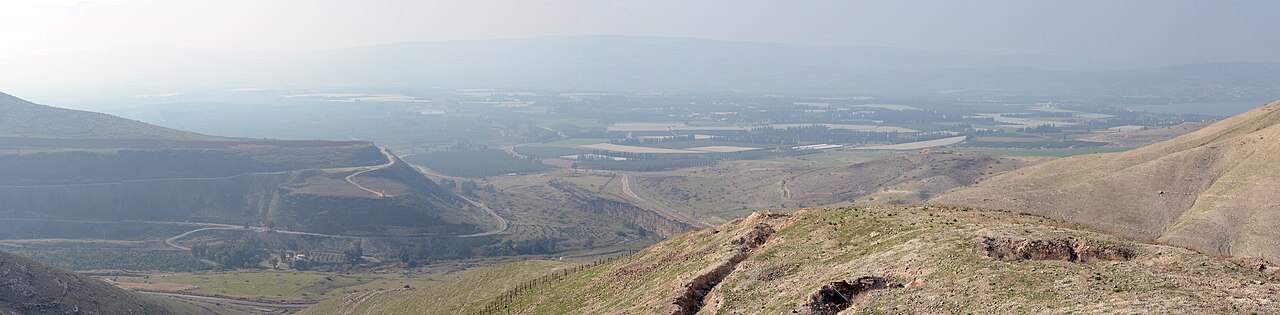
The thicket of the Jordan
The "swelling" (ge'on, literally "pride") of the Jordan is the zor, the dense jungle of tamarisk, willow and reeds in the river's flood plain, below the higher terraces. Until modern times it sheltered wild boar and, in antiquity, lions (Jeremiah 49:19; 50:44; Zechariah 11:3). God's image is of a man who stumbles in open country and then must push through lion country.
The second confession (11:18–12:6)
Most scholars read 11:18–23 and 12:1–6 as one unit or two linked poems: the plot, the prayer for vengeance, the complaint about the wicked, and God's reply. The order is puzzling (the betrayal by family in 12:6 seems to explain 11:18), and some propose that 12:6 originally came before 11:18. The site keeps the received order and studies the poems separately in "Jeremiah's Confessions."
Theodicy without an answer
"Why does the way of the wicked prosper?" is asked in Job 21, Psalms 37 and 73, Habakkuk 1, and Malachi 3:15. Jeremiah's form is distinctive: he begins by conceding that God is righteous and then presses his case, using courtroom language. The site does not treat the complaint as a failure of faith; the book presents it as a prayer, and God replies. That the reply refuses an explanation is part of what the text says.
Hebrew and Greek
The Greek in v. 1 has "those who reject you" for "those who deal very treacherously" (bogdei vaged, an intensive phrase), and in v. 5 "your feet run" for "you ran with footmen." These are differences of reading or translation within one sentence, not differences of edition.
What the evidence shows
- In 12:1 Jeremiah uses the language of a legal complaint (riv).
- Jeremiah 12:1 borrows from Job or Psalm 73. Shared theme; no shown dependence.
- Lions lived in the Jordan thickets in antiquity.
- 12:14–17 offers foreign nations restoration on condition of learning Israel's ways.
More from this lesson
Why this matters to the rest of Scripture
- Why do the wicked live on?
- "I saw the prosperity of the wicked."
- How long, LORD?
- The ruined vineyard.