Jeremiah 13: The Linen Girdle
A ruined loincloth, wine jars, a falling queen mother, and the leopard's spots
"Thus saith the LORD unto me, Go and get thee a linen girdle, and put it upon thy loins, and put it not in water… Take the girdle that thou hast got… and arise, go to Euphrates, and hide it there in a hole of the rock. So I went, and hid it by Euphrates, as the LORD commanded me. And it came to pass after many days… Then I went to Euphrates, and digged, and took the girdle from the place where I had hid it: and, behold, the girdle was marred, it was profitable for nothing" (13:1–7).
"For as the girdle cleaveth to the loins of a man, so have I caused to cleave unto me the whole house of Israel and the whole house of Judah, saith the LORD; that they might be unto me for a people, and for a name, and for a praise, and for a glory: but they would not hear" (v. 11).
"Every bottle shall be filled with wine: and they shall say unto thee, Do we not certainly know that every bottle shall be filled with wine? Then shalt thou say unto them, Thus saith the LORD, Behold, I will fill all the inhabitants of this land, even the kings that sit upon David's throne, and the priests, and the prophets… with drunkenness. And I will dash them one against another" (vv. 12–14). "Say unto the king and to the queen, Humble yourselves, sit down: for your principalities shall come down, even the crown of your glory" (v. 18).
"Can the Ethiopian change his skin, or the leopard his spots? then may ye also do good, that are accustomed to do evil" (v. 23).
| Verses | What it says | What to notice |
|---|---|---|
| 13:1–2 | Buy a linen loincloth, wear it, do not put it in water | An ezor: a waistcloth or kilt. Linen was priestly (Leviticus 16:4). |
| 13:3–7 | Take it to Perath and hide it in a rock cleft; after many days dig it up: ruined | Perath: the Euphrates, or the spring Ein Prat near Anathoth (see the passage page). |
| 13:8–11 | So I will ruin Judah's pride; as a loincloth clings, I made Israel and Judah cling to me, to be my people, name, praise and glory | Deuteronomy 26:19 has the same three words of honor. |
| 13:12–14 | Every jar is filled with wine; "We know that!"; I will fill the kings, priests, prophets and people with drunkenness and smash them together | A saying turned into a threat; jars smashed anticipate 19:10–11. |
| 13:15–17 | Do not be proud; give glory before the darkness; if you will not listen, I will weep in secret | The prophet's tears again (9:1). |
| 13:18–19 | Say to the king and the queen mother (gevirah): sit down low, your crowns have fallen; the Negev towns are shut; all Judah exiled | Usually linked to Jehoiachin and his mother Nehushta in 597 BC (2 Kings 24:8, 12). |
| 13:20–23 | Look at those coming from the north; where is your flock? pains like a woman in labor; your skirts lifted; can a Cushite change his skin or a leopard its spots? | Cushite: from Kush (Nubia, modern Sudan). |
| 13:24–27 | I will scatter you like chaff; you trusted in falsehood; I will lift your skirts over your face; your adulteries and lusty neighings on the hills | Sexualized imagery for idolatry (compare Ezekiel 16; 23; Hosea 2). |
Linen and the loincloth
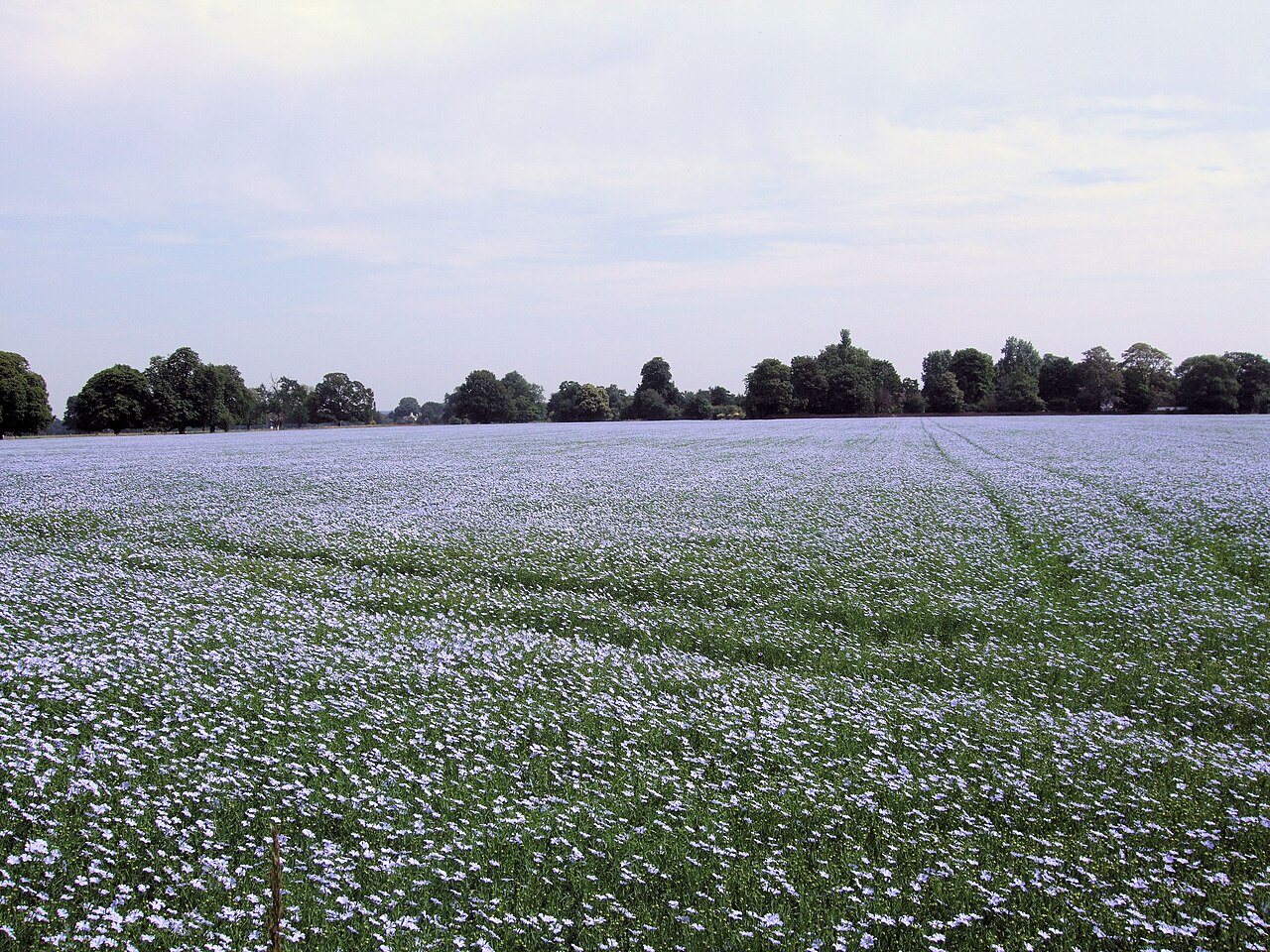
Linen was woven from flax, grown in Egypt and the Levant (the Gezer calendar names a month of "cutting flax"; Rahab hid the spies under stalks of flax, Joshua 2:6). An ezor was a band or short kilt tied at the waist, worn next to the body. Linen rots if buried in damp ground. Priests wore linen undergarments (Exodus 28:42), and some interpreters see the garment as Israel's priestly calling; others see simply the closest of garments. No archaeological find bears on Jeremiah's girdle.
The queen mother
The gevirah ("great lady") was the king's mother, who held an official place at the Judean court; the books of Kings name the mother of almost every Judean king. Nehushta, mother of Jehoiachin, was deported with him in 597 BC (2 Kings 24:12, 15; Jeremiah 29:2). Most readers connect 13:18 with that moment, though the verse does not name them.
Sign-act, vision or parable?
Jeremiah performs several sign-acts: the loincloth (13), staying unmarried (16), the broken flask (19), the yoke (27), the field at Anathoth (32), the stones at Tahpanhes (43). The loincloth is the hardest to picture as a literal act if Perath is the Euphrates, some 500 km from Jerusalem by the shortest route, travelled twice. Three readings have defenders: a real journey (perhaps over months; the text says "after many days"); a real act at a nearer place whose name evoked the Euphrates (Ein Prat in the Wadi Qelt, or Parah of Joshua 18:23); or a vision or literary parable told in narrative form. The text gives no signal, and the site does not choose.
"Can the Ethiopian change his skin?"
The Hebrew is Kushi, a person from Kush, the Nubian kingdom south of Egypt; Kushite kings ruled Egypt in the 25th dynasty (c. 744–656 BC), and Kushites appear in Jeremiah as officials (Ebed-melech, 38:7). The proverb uses dark skin and leopard spots as examples of what cannot be changed. It says nothing for or against Kushites: its point is that Judah's habits of evil are as fixed as a natural trait. Later writers have misused the verse to support racial contempt, a use the text does not make.
Women's bodies as metaphor
Verses 22 and 26 picture Jerusalem as a woman whose skirts are lifted and whose "nakedness" is exposed, punishment for "adulteries" and "neighings." This metaphor of the unfaithful wife runs through Hosea, Jeremiah 2–3 and Ezekiel 16 and 23. Its target is the city and its leaders, but it uses public sexual humiliation of a woman as the image of just punishment. Many modern readers, Jewish and Christian, judge that the image can normalize violence against women, and read it critically while taking its warning against idolatry seriously. The site names the problem rather than smoothing it over (see "Women, Metaphor, and Coercion," release 5).
What the evidence shows
- Perath in 13:4–7 is the Euphrates. The word's usual meaning; a nearer place is also proposed.
- 13:18 refers to Jehoiachin and Nehushta in 597 BC. The verse names no one.
- Kushi in 13:23 means a person from Kush (Nubia).
- The girdle sign-act happened as a literal journey.
More from this lesson
Why this matters to the rest of Scripture
- "For praise, and for name, and for honour."
- Jehoiachin and his mother deported.
- Smashed vessels.
- Ezekiel 16; Hosea 2The unfaithful wife metaphor.