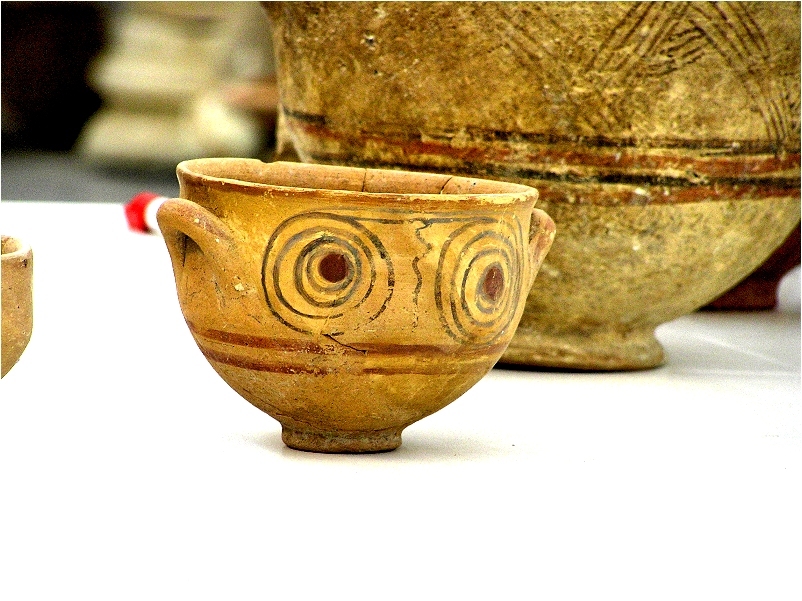
Jeremiah 18: The Potter's House
Clay reworked on the wheel, prophecy that depends on response, and the fifth confession
"The word which came to Jeremiah from the LORD, saying, Arise, and go down to the potter's house, and there I will cause thee to hear my words. Then I went down to the potter's house, and, behold, he wrought a work on the wheels. And the vessel that he made of clay was marred in the hand of the potter: so he made it again another vessel, as seemed good to the potter to make it" (18:1–4).
"O house of Israel, cannot I do with you as this potter? saith the LORD. Behold, as the clay is in the potter's hand, so are ye in mine hand, O house of Israel. At what instant I shall speak concerning a nation… to pluck up, and to pull down, and to destroy it; If that nation, against whom I have pronounced, turn from their evil, I will repent of the evil that I thought to do unto them. And at what instant I shall speak concerning a nation… to build and to plant it; If it do evil in my sight… then I will repent of the good" (vv. 6–10).
"And they said, There is no hope: but we will walk after our own devices, and we will every one do the imagination of his evil heart" (v. 12). "Then said they, Come, and let us devise devices against Jeremiah; for the law shall not perish from the priest, nor counsel from the wise, nor the word from the prophet. Come, and let us smite him with the tongue" (v. 18).
"Give heed to me, O LORD… Shall evil be recompensed for good? for they have digged a pit for my soul. Remember that I stood before thee to speak good for them, and to turn away thy wrath from them. Therefore deliver up their children to the famine, and pour out their blood by the force of the sword… forgive not their iniquity, neither blot out their sin from thy sight" (vv. 19–23).
| Verses | What it says | What to notice |
|---|---|---|
| 18:1–4 | Go down to the potter's house; he works at the two stones (ovnayim); the vessel is spoiled and he reworks it into another | "Go down": the workshops were below the temple and upper city. |
| 18:5–6 | Can I not do with you as this potter? Like clay in the potter's hand, so are you in mine | God's freedom, and Israel's pliability. |
| 18:7–10 | If I speak of uprooting a nation and it turns, I relent; if I speak of building it and it does evil, I relent of the good | The verbs of 1:10. Compare Jonah 3:10; Ezekiel 18:21–24; 33:13–16. |
| 18:11–12 | I am shaping (yotser, a potter's word) evil against you; turn back; "No use! we will follow our own plans" | The potter's verb used for God's plan. |
| 18:13–17 | Ask the nations: has anyone heard of such a thing? Does Lebanon's snow leave its crags? My people forgot me, burned incense to nothing, left the ancient paths; an east wind will scatter them | "Ancient paths" also in 6:16. |
| 18:18 | Let us plot against Jeremiah: the torah will not perish from the priest, nor counsel from the wise, nor the word from the prophet; let us strike him with the tongue | Three offices of instruction, all against him. |
| 18:19–23 | Listen to me; shall evil repay good? I stood before you to speak good of them; give their children to famine, their wives childless and widowed; do not forgive them | The fifth confession. |
The potter's craft
Iron Age potters in Judah worked on a wheel turned by hand or foot: the Hebrew ovnayim, "two stones," fits the basalt wheel bearings found in Bronze and Iron Age workshops, a lower stone socket with an upper stone that spins. Potters' workshops with kilns and wheel stones were excavated at Sarepta in Phoenicia (Late Bronze and Iron Age), and a Late Bronze Age potter's workshop in a cave at Lachish preserved its wheel stones and tools (reported; C check). Clay was dug, soaked and kneaded, then thrown; while it is wet a flawed vessel can be squashed back into a lump and thrown again. Once fired in the kiln, it becomes ceramic and can only be broken. The difference between chapter 18 (wet clay reworked) and chapter 19 (a fired flask smashed) is the difference between a people who can still turn and a judgment that can no longer be undone.
Snow of Lebanon
Mount Hermon and the Lebanon range hold snow into summer, feeding cold springs and rivers such as the Jordan's sources at Dan and Banias. Verse 14 asks, in a difficult Hebrew line, whether such dependable things ever fail; Israel's forgetfulness is more unnatural than snow leaving the mountains.
Conditional prophecy (18:7–10)
This passage states a principle that much of the Hebrew Bible assumes: an announcement of judgment or blessing may be an appeal, not a fixed forecast. Jonah's "Yet forty days, and Nineveh shall be overthrown" is cancelled when Nineveh repents (Jonah 3:4–10); Micah's threat against Jerusalem was not carried out in Hezekiah's day because the king sought God (Jeremiah 26:18–19). Not every prophecy has the same logic: some are presented as unconditional promises (for example 31:35–37). Readers who test prophecy by fulfillment alone should notice that the Bible itself makes many prophecies depend on response. See "The Potter and the Clay."
Priest, sage and prophet (18:18)
"The law (torah) shall not perish from the priest, nor counsel from the wise, nor the word from the prophet" is the clearest statement in the Bible of three kinds of religious authority in late Judah: priests who taught the law, sages who gave counsel, prophets who gave the word. Ezekiel 7:26 has a similar triad. Jeremiah's opponents claim all three are on their side.
The fifth confession and revenge
Jeremiah reminds God that he once interceded for these people (v. 20; compare 14:7–9, 19–22) and now asks for their children's death and for no forgiveness. The imprecatory psalms (Psalms 35, 69, 109, 137) use similar language. Readers have responded in several ways: as a human outburst honestly recorded, not endorsed; as handing vengeance over to God rather than taking it; as a sign of the cost of the prophet's calling; or as a moral problem that later traditions (Jesus' "pray for them which despitefully use you," Matthew 5:44; Luke 23:34) answer differently. The site presents the prayer and these readings without deciding among them.
What the evidence shows
- Ovnayim refers to a two-stone potter's wheel.
- Jeremiah 18:7–10 makes judgments and promises conditional on response.
- All biblical prophecy is conditional. Some promises are presented as unconditional.
- Iron Age potters' workshops with wheel stones and kilns have been excavated in the Levant.
More from this lesson
Why this matters to the rest of Scripture
- Nineveh's repentance and God's relenting.
- Isaiah 29:16; 45:9; 64:8Potter and clay in Isaiah.
- Paul's use of the image.
- A prayer against enemies.