Jeremiah 19: The Broken Flask
A potter's jar shattered in the Valley of Ben-Hinnom, Topheth renamed, and a city that cannot be mended
"Thus saith the LORD, Go and get a potter's earthen bottle, and take of the ancients of the people, and of the ancients of the priests; And go forth unto the valley of the son of Hinnom, which is by the entry of the east gate, and proclaim there the words that I shall tell thee… Behold, I will bring evil upon this place, the which whosoever heareth, his ears shall tingle" (19:1–3).
"Because they have forsaken me… and have filled this place with the blood of innocents; They have built also the high places of Baal, to burn their sons with fire for burnt offerings unto Baal, which I commanded not, nor spake it, neither came it into my mind: Therefore, behold, the days come, saith the LORD, that this place shall no more be called Tophet, nor The valley of the son of Hinnom, but The valley of slaughter" (vv. 4–6).
"Then shalt thou break the bottle in the sight of the men that go with thee, And shalt say unto them, Thus saith the LORD of hosts; Even so will I break this people and this city, as one breaketh a potter's vessel, that cannot be made whole again: and they shall bury them in Tophet, till there be no place to bury" (vv. 10–11).
"Then came Jeremiah from Tophet, whither the LORD had sent him to prophesy; and he stood in the court of the LORD's house; and said to all the people, Thus saith the LORD of hosts… Behold, I will bring upon this city and upon all her towns all the evil that I have pronounced against it, because they have hardened their necks, that they might not hear my words" (vv. 14–15).
| Verses | What it says | What to notice |
|---|---|---|
| 19:1–2 | Buy a potter's clay flask; take elders of the people and of the priests; go to the Valley of Ben-Hinnom at the Potsherd Gate | Witnesses for a public sign. Baqbuq: a narrow-necked flask. |
| 19:3–5 | Ears will tingle; they made this place foreign, burned incense to unknown gods, filled it with innocent blood, built high places of Baal to burn their sons | "Ears shall tingle": 1 Samuel 3:11; 2 Kings 21:12. |
| 19:6–9 | No more Topheth or Ben-Hinnom, but the Valley of Slaughter; plans emptied; corpses for birds; the city a horror; siege cannibalism | Siege famine: Deuteronomy 28:53–57; Lamentations 2:20; 4:10. |
| 19:10–13 | Break the flask before the men: so I will break this people beyond repair; burials in Topheth until there is no room; the city like Topheth; rooftop offerings to the host of heaven | Rooftop incense: Zephaniah 1:5. |
| 19:14–15 | From Topheth to the temple court: all the evil I spoke will come, because they hardened their necks | This public scene leads to Pashhur's arrest (20:1–2). |
The Valley of Ben-Hinnom
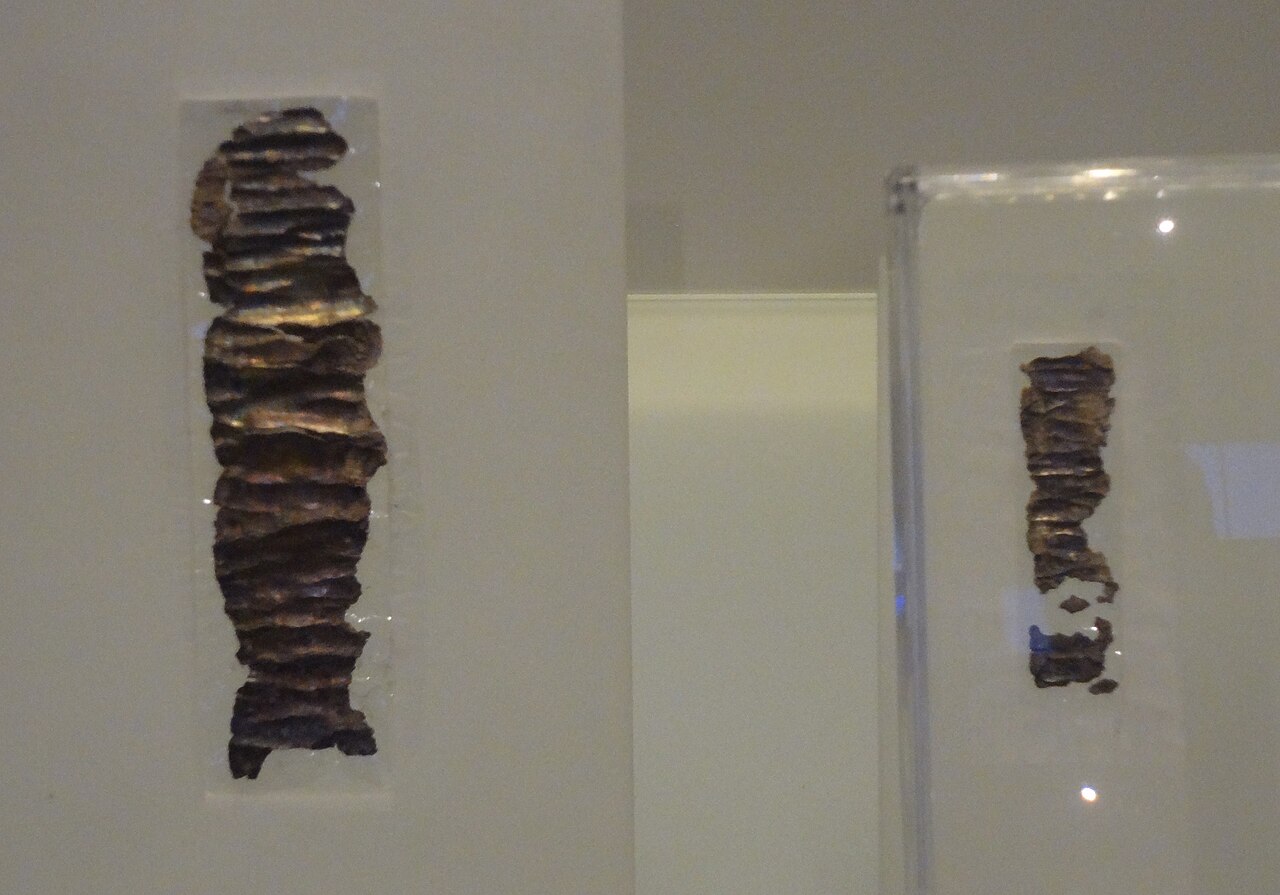
The Valley of the son of Hinnom (Ge ben-Hinnom) curves around the west and south of ancient Jerusalem and meets the Kidron Valley south of the City of David. It formed part of the boundary between Judah and Benjamin (Joshua 15:8; 18:16). On its slopes are rock-cut tombs of the Iron Age; at Ketef Hinnom, on its western side, burial caves of the 7th–6th centuries BC yielded two small silver scrolls inscribed with words close to the Priestly Blessing (Numbers 6:24–26), the oldest known texts that parallel a biblical passage. The valley was thus a place of family tombs as well as the site of Topheth. The Potsherd Gate (sha'ar ha-charsit, 19:2), named only here, probably led down to it, perhaps near the later Dung Gate (Nehemiah 2:13; 3:13–14), though its location is uncertain.
Topheth
Topheth (KJV "Tophet") was a cult place "in the valley of the son of Hinnom" where children were "passed through the fire" or burned (2 Kings 23:10; Jeremiah 7:31; 19:5; 32:35). Kings Ahaz and Manasseh are said to have made their sons "pass through the fire" (2 Kings 16:3; 21:6), and Josiah defiled Topheth to stop the practice (2 Kings 23:10). Jeremiah 19:5 associates it with Baal; 7:31 and 32:35 stress that God never commanded it, which may answer people who claimed he had. The name may come from an Aramaic word for hearth (tephath), vocalized by scribes like boshet, "shame." No excavation in Jerusalem has identified Topheth. Many scholars compare the Punic tophets at Carthage and other western Phoenician colonies, precincts with urns of burned infant and animal remains and stelae dedicated to Baal Hammon and Tanit; whether those urns represent sacrifice or burials of children who died naturally is debated, and so is how far they illuminate Judah. The biblical texts describe the practice as real and condemn it.
Gehenna: what the evidence shows
The Valley of Hinnom became, in Greek, Gehenna (Ge-hinnom), the place of fiery punishment in 1 Enoch 27, in the Gospels (Mark 9:43–48; Matthew 5:22) and in rabbinic literature. A popular explanation says that in Jesus' time the valley was a city rubbish dump where fires burned continuously. There is no ancient evidence for that: no text from the Second Temple period describes such a dump, and excavations in the valley have found tombs, not a burning landfill. The explanation first appears in a commentary by Rabbi David Kimchi (c. AD 1200) on Psalm 27:13. The more likely background of the Gehenna imagery is the biblical history itself: Topheth's fires, Jeremiah's "valley of slaughter" filled with the dead (7:32; 19:6, 11), and Isaiah 66:24's corpses whose "fire shall not be quenched" (see the Isaiah 66 lesson).
Two vessels: chapter 18 and chapter 19
Both chapters use the potter, but differently. In 18 Jeremiah watches; the clay is wet; the vessel is spoiled and reworked; the lesson is conditional ("if that nation… turn"). In 19 Jeremiah acts; the vessel is fired; it is shattered; the lesson is final ("that cannot be made whole again"). The two scenes may come from different times in Jeremiah's ministry, or have been placed together by editors to show a progression from appeal to verdict. See "The Potter and the Clay."
Two sermons in one chapter
Many scholars see two strands: a narrative of the sign-act (vv. 1, 2a, 10–11a, 14–15) and a prose sermon about Topheth (vv. 2b–9, 11b–13) in the style of 7:30–34. The breaking of the flask makes sense on its own; the Topheth sermon develops it. Whether the combination is editorial or original, the chapter now ties the broken flask to the valley of child sacrifice.
Hebrew, Greek and the library's file
The library's French Greek file runs 19:7–15 together in the slot for 19:7, with a translator's footnote spliced into the middle of v. 7 (and the end of v. 7 lost); the slots for 19:8–15 are empty. The Greek Jeremiah has all these verses in their places; this is a defect of the digital file's verse division, not a shorter Greek edition (D register JE-D02). On the Hebrew side, 4QJer-c preserves parts of vv. 8–9 and reads "they will eat" where the Masoretic Text has "I will make them eat" (v. 9), a small difference in a mostly lost verse. Jeremiah survives in two ancient Hebrew editions: the longer one preserved as the Masoretic Text (the basis of most Bibles) and a shorter one translated into Greek in the last centuries BC and also found, in fragments, among the Dead Sea Scrolls. The Greek is not simply a damaged copy of the Hebrew: it often reflects a different Hebrew text. The site shows both, and weighs each difference on its own (see "Two Ancient Jeremiahs").
What the evidence shows
- Topheth was in the Valley of Ben-Hinnom.
- Topheth has been located by excavation.
- Ketef Hinnom's silver scrolls contain words close to Numbers 6:24–26.
- Gehenna was a continuously burning rubbish dump in Jesus' time. First found in David Kimchi (c. AD 1200); no ancient evidence.
- The Punic tophets show child sacrifice.
- The library's Greek file merges 19:7–15 into one verse slot (a digitization defect).
More from this lesson
Why this matters to the rest of Scripture
- Josiah defiles Topheth.
- The first Topheth sermon.
- Gehenna in Jesus' words.
- The potter's field.