Investigation: The Temple Is Not a Magic Shield
Shiloh's ruins, Jeremiah's Temple Sermon told twice, and "a den of robbers" in the mouth of Jesus
Jerusalem had reason to think its temple was safe. In 701 BC the Assyrian army that destroyed Lachish withdrew from Jerusalem (Isaiah 36–37), and psalms sang of the city God would not let fall: "God is in the midst of her; she shall not be moved" (Psalm 46:5; compare 48). Josiah's reform had made the Jerusalem temple the only legitimate sanctuary. Jeremiah's sermon attacks the conclusion people drew from this: that God's house protected them whatever they did.
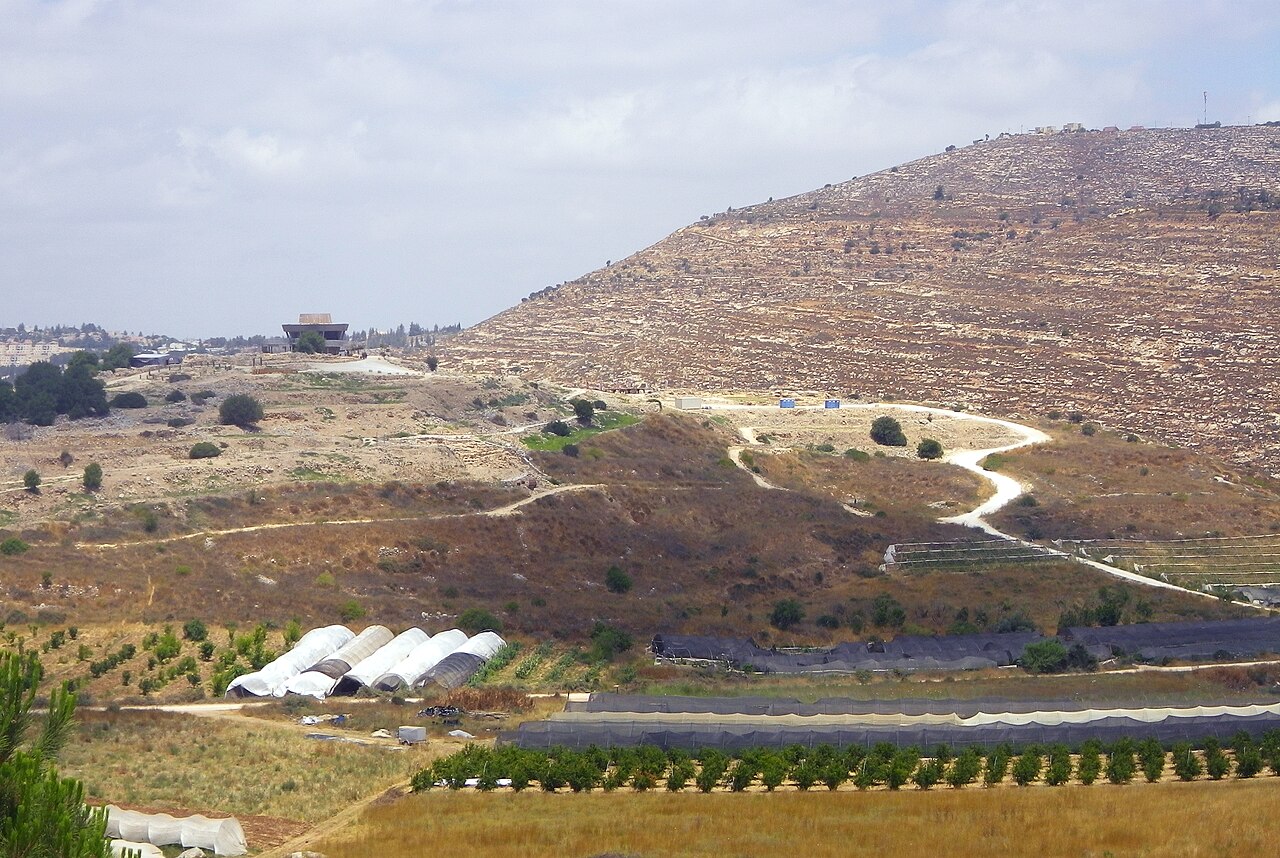
He points north, to Shiloh, where Israel's sanctuary once stood: "Go ye now unto my place which was in Shiloh, where I set my name at the first, and see what I did to it" (7:12). In chapter 26 the threat is "I make this house like Shiloh, and will make this city a curse" (26:6), and the crowd seizes him: "Thou shalt surely die" (26:8). The elders recall that Micah had said "Zion shall be plowed like a field" in Hezekiah's day, and that Hezekiah did not kill him (26:18–19; Micah 3:12).
| Jeremiah 7 | Jeremiah 26 | |
|---|---|---|
| Date | Not given | "In the beginning of the reign of Jehoiakim" (c. 609/608 BC) |
| Place | "The gate of the LORD's house" | "The court of the LORD's house" |
| Content | The full sermon: amend your ways; do not trust "the temple of the LORD"; den of robbers; Shiloh; do not pray; queen of heaven; obedience not sacrifice; Topheth | A summary: if you do not listen, "I make this house like Shiloh" |
| Response | Not narrated | Priests and prophets demand death; officials hold a hearing; elders cite Micah 3:12; Ahikam son of Shaphan protects Jeremiah |
| Contrast | The prophet Uriah son of Shemaiah, who spoke the same message, is extradited from Egypt and killed by Jehoiakim (26:20–23) |
| Witness | Introduction | From Isaiah 56:7 | From Jeremiah 7:11 | Notes |
|---|---|---|---|---|
| Jeremiah 7:11, Hebrew (Masoretic Text) | Spoken by God through Jeremiah | — | "Is this house… become a den (me'arah) of robbers (peritsim) in your eyes?" | A question. Peritsim: violent men, robbers who break in. A me'arah is a cave, a hideout. |
| Jeremiah 7:11, Greek (library: Giguet's French; Greek reported as spēlaion lēstōn) | God speaking | — | "Is my house… a cave of robbers?" (Giguet: "une caverne de voleurs") | The Greek's opening of chapter 7 is shorter, so this is Greek 7:10. The Greek words match the Gospels' phrase exactly (reported; C check against Ziegler). |
| Mark 11:17 (Greek) | "And he taught, saying unto them, Is it not written…?" | "My house shall be called of all nations the house of prayer" (pasin tois ethnesin) | "But ye have made it a den of thieves (spēlaion lēstōn)" | Mark: words attributed to Jesus. Only Mark keeps "for all the nations." Mark frames it as teaching and sets it between the cursing and the withering of the fig tree (11:12–14, 20–21). |
| Matthew 21:13 (Greek) | "It is written" | "My house shall be called the house of prayer" | "But ye have made it a den of thieves" (SR: poieite, "you are making"; Byzantine and TR: epoiēsate, "you made") | Matthew: words attributed to Jesus. Omits "for all the nations." Followed by Jesus healing the blind and lame in the temple (21:14). |
| Luke 19:46 (Greek) | "It is written" | "My house is the house of prayer" (SR has no verb; Byzantine and TR add estin, "is"; other editions read "shall be", reported) | "But ye have made it a den of thieves" (epoiēsate) | Luke: words attributed to Jesus. The shortest account; omits "for all the nations" and the overturned tables. |
| John 2:16 (Greek) | Spoken to the dove sellers | — | — | John: words attributed to Jesus. No quotation of Jeremiah: "make not my Father's house an house of merchandise." The disciples recall Psalm 69:9. John places the event at the start of Jesus' ministry. |
"Den" and "robbers"
Jeremiah's image is precise: a me'arah is a cave, the hideout where robbers retreat between raids and feel safe. His hearers commit crimes (7:9) and then come to the temple to say "We are delivered" (7:10), treating it as their hideout. The Greek spēlaion lēstōn keeps "cave of bandits." In the Gospels' Greek, lēstēs is the word for a bandit or brigand; in Josephus it is also used for armed rebels against Rome, and Jesus was crucified between two lēstai (Mark 15:27). Whether the Gospels intend the robbers to be traders who cheat, authorities who profit, or people who treat the temple as a nationalist stronghold is debated. Jeremiah's own sense, a hideout for the guilty, fits all three to some degree.
Jesus son of Ananias
Josephus (Jewish War 6.300–309) tells of another Jesus, son of Ananias, a farmer who in AD 62, four years before the war with Rome, began crying in the temple at the feast of Tabernacles: "A voice from the east, a voice from the west… a voice against Jerusalem and the temple, a voice against bridegrooms and brides." The last words echo Jeremiah 7:34 ("the voice of the bridegroom, and the voice of the bride"). The Jerusalem authorities had him beaten and handed him to the Roman governor, who flogged him and released him as a madman; he was killed by a stone during the siege of 70. His story shows that Jeremiah's temple oracles were still used by Jewish prophets of doom in the 1st century AD, quite apart from the Gospels.
Is Jesus quoted directly?
All three Synoptic Gospels present the saying as Jesus' own speech: it is introduced with "he said unto them" or "saying unto them," and it is set inside a narrative of his action in the temple. It is therefore attributed directly to Jesus. Each evangelist gives it in Greek, and the three wordings differ in small ways (the introduction, the length of the Isaiah quotation, the tense of the verb). The Jeremiah portion, spēlaion lēstōn, is identical in all three and identical with the Greek of Jeremiah 7:11 (reported for the Septuagint; C check). Whether these are Jesus' exact words, a translation of something he said in Aramaic, or the evangelists' interpretation of his action is a question historians answer differently. The site labels the saying "words attributed to Jesus" and keeps each Gospel's form separate.
What each Gospel adds or omits
Mark has the fullest Isaiah quotation, including "for all the nations," which fits the temple's Court of the Gentiles, where trading took place; he says Jesus "taught," stops people carrying vessels through the temple (11:16, only in Mark), and frames the scene with the fig tree, suggesting a sign of judgment. Matthew drops "for all the nations" and the carrying of vessels, and follows the saying with healings and children's praise in the temple (21:14–16). Luke reduces the scene to two verses and adds that Jesus then taught daily in the temple (19:47). John has no Jeremiah quotation at all, places the event early, and links it with a saying about the destruction and raising of "this temple" (2:19–21). These differences are the evangelists' own; the site does not merge them into one account.
Jeremiah's setting and the Gospels' setting
Jeremiah spoke in the First Temple, built by Solomon and soon to be destroyed by Babylon (587/586 BC). Jesus is reported to have spoken in the Second Temple, rebuilt after the exile and greatly enlarged by Herod, destroyed by Rome in AD 70. The Gospels were written around or after that destruction (dates debated). Jeremiah's sermon is about injustice and false security; the Gospel scene is set amid trade in sacrificial animals and money-changing in the outer court. In both, a prophet's words against the temple bring the authorities to seek his death (Jeremiah 26:8–11; Mark 11:18). Mark 13:2 and the charge at Jesus' trial (Mark 14:58) also connect Jesus with a prediction of the temple's destruction, as Jeremiah 26 connects Jeremiah with one.
What historians can and cannot say
Most historians of Jesus think an incident in the temple shortly before his death is historical, because it is reported in all four Gospels and helps explain why the authorities acted against him; its size, its exact timing (John's early placement versus the Synoptics' late one), and its purpose are debated. Proposals include a protest against commercial abuse, a symbolic act announcing the temple's coming destruction, and an act pointing to a renewed temple. Whether Jesus himself cited Jeremiah 7:11, or the tradition attached the citation to his act, cannot be settled historically. What can be said is that the Gospels' use of the phrase draws on a well-known prophetic tradition of temple critique that Jesus son of Ananias also drew on.
Two editions
The Greek of Jeremiah 7:1–2 is much shorter than the Hebrew (it lacks the setting in the temple gate), so Greek verse numbers in chapter 7 run one behind. The sermon's content is otherwise close in the two editions. 4QJer-a preserves parts of 7:28–34 in agreement with the Masoretic Text. Jeremiah survives in two ancient Hebrew editions: the longer one preserved as the Masoretic Text (the basis of most Bibles) and a shorter one translated into Greek in the last centuries BC and also found, in fragments, among the Dead Sea Scrolls. The Greek is not simply a damaged copy of the Hebrew: it often reflects a different Hebrew text. The site shows both, and weighs each difference on its own (see "Two Ancient Jeremiahs").
What the evidence shows
- Jeremiah 7 and 26 report the same Temple Sermon.
- Mark 11:17, Matthew 21:13 and Luke 19:46 attribute the "den of thieves" saying to Jesus.
- Only Mark includes "for all the nations" from Isaiah 56:7.
- John 2:16 quotes Jeremiah 7:11. John has "a house of merchandise" and no Jeremiah quotation.
- The Gospels' spēlaion lēstōn matches the Septuagint of Jeremiah 7:11. Reported Greek; library has only Giguet's French; C check against Ziegler.
- Jesus son of Ananias echoed Jeremiah 7:34 in the temple in AD 62.Source: Josephus, Jewish War 6.300–309
- Jesus' action in the temple is historical. Widely held; details debated.
- Jesus himself quoted Jeremiah 7:11. The Gospels say so; historians cannot verify the exact words.
- The temple's presence protected Jerusalem regardless of conduct. The view Jeremiah attacks.
More from this lesson
Why this matters to the rest of Scripture
- The sermon.
- The trial.
- "Zion shall be plowed like a field."
- "An house of prayer for all people."
- Mark's account.
- Matthew's account.
- Luke's account.
- John's account.