Investigation: The Potter and the Clay
A craft of Iron Age Judah, a vessel reworked and a vessel shattered, and Paul's different argument in Romans 9
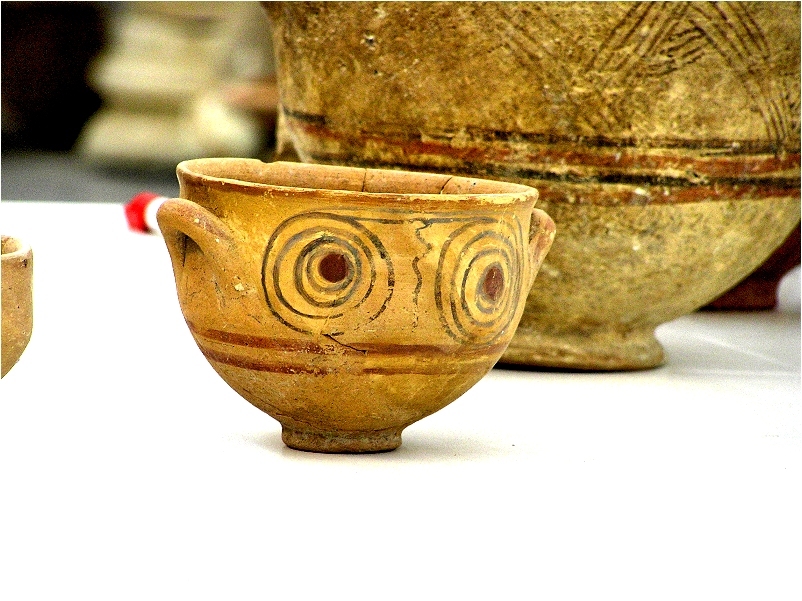
Pottery was the most common manufactured thing in ancient Judah. Every household used jars, bowls, cooking pots, lamps and juglets, and they broke constantly; archaeologists date strata by their sherds. A potter's workshop was an ordinary place: clay soaked in pits, a wheel turning on stone bearings, a kiln. Jeremiah's audience knew what it meant for wet clay to collapse on the wheel, and what it meant to hear a fired jar break.
That knowledge carries the two lessons. Wet clay can be squeezed back into a lump and thrown again: so in 18:7–10 a nation that turns can be remade. Fired clay cannot be softened: so in 19:11 the city will be broken past repair. The prophet first offers the possibility of change, then announces its end.
| Stage of the craft | What happens | In Jeremiah |
|---|---|---|
| Digging and preparing clay | Clay is dug, soaked, cleaned of stones and kneaded (sometimes trodden, Isaiah 41:25) | "As the clay is in the potter's hand" (18:6) |
| Throwing on the wheel | The potter shapes the vessel on a wheel turning on two stones (ovnayim) | "He wrought a work on the wheels" (18:3) |
| A flaw | An air bubble, uneven wall or bad clay makes the vessel collapse | "The vessel… was marred in the hand of the potter" (18:4) |
| Reworking | While still wet the clay is pressed back into a lump and thrown again | "He made it again another vessel" (18:4) |
| Drying and firing | The vessel dries, then is fired in a kiln and becomes ceramic | The baqbuq, a fired flask (19:1) |
| Breaking | A fired vessel cannot be reshaped; broken, it becomes sherds (used for writing, scraping, or discarded) | "That cannot be made whole again" (19:11); the Potsherd Gate (19:2) |
| Text | Date (approximate) | The image | The point |
|---|---|---|---|
| Isaiah 29:16 | 8th century BC (debated) | "Shall the work say of him that made it, He made me not?" | Human beings cannot outwit their maker |
| Isaiah 45:9 | 6th century BC (debated) | "Shall the clay say to him that fashioneth it, What makest thou?" | Israel should not question God's use of Cyrus |
| Isaiah 64:8 | 6th–5th century BC (debated) | "We are the clay, and thou our potter" | A plea: remember the work of your hands |
| Jeremiah 18:1–12 | Late 7th–early 6th century BC | A spoiled vessel reworked | God's freedom, and judgment that depends on response |
| Jeremiah 19:1–13 | Late 7th–early 6th century BC | A fired flask shattered | Judgment beyond repair |
| Job 10:9 | Uncertain | "Thou hast made me as the clay" | Job asks why his maker would destroy him |
| Wisdom of Solomon 15:7 | 1st century BC (debated) | A potter makes from the same clay vessels for clean uses and their opposite | Satire on idol makers |
| Sirach 33:13 | c. 180 BC | "As the clay is in the potter's hand… so man is in the hand of him that made him" | God assigns different destinies |
| Qumran Community Rule and Hymns | 1st century BC | The human being as "a creature of clay" | Human frailty before God |
| Romans 9:20–21 | c. AD 57 | "Hath not the potter power over the clay, of the same lump to make one vessel unto honour, and another unto dishonour?" | God's freedom to show mercy to Gentiles and Jews (Romans 9–11) |
The Valley of Ben-Hinnom and the Potsherd Gate
The second scene takes place in the valley west and south of ancient Jerusalem, where Topheth stood and where Iron Age families cut tombs in the rock (Ketef Hinnom). Jeremiah goes out "by the entry of the Harsith gate," the Potsherd Gate, a name found only here; it may have been where broken pottery was thrown out, and it is often placed at the south end of the city near the later Dung Gate, though its location is not known. Smashing a jar in that valley tied the sign to the place of child sacrifice. Later Gehenna, the valley's Greek name, became a name for the place of final punishment; the claim that in Jesus' day it was a burning rubbish dump has no ancient evidence (see Jeremiah 19).
Chapter 18: freedom and response
The potter's freedom over the clay (18:6) could be read as fate: God does what he likes. Jeremiah immediately qualifies it: God's announcements to nations depend on how they respond (18:7–10). The potter reworks the clay because the vessel failed, and the point is addressed to people who can still "return… every one from his evil way" (18:11). The scene combines God's sovereignty with human responsibility rather than setting them against each other.
Chapter 19: a sign past repair
By contrast, the broken flask allows no change: the city will be broken "as one breaketh a potter's vessel, that cannot be made whole again." Whether the two scenes come from different periods of Jeremiah's ministry or were placed together by editors, the sequence moves from possibility to finality. Even so, the book later speaks of rebuilding and planting (31:28; 32:15): the vessel smashed in 19 is not the book's last word.
Romans 9: Paul's own argument
In Romans 9:19–24 Paul answers the objection that if God hardens whom he wills, he cannot blame anyone: "Nay but, O man, who art thou that repliest against God? Shall the thing formed say to him that formed it, Why hast thou made me thus? Hath not the potter power over the clay, of the same lump to make one vessel unto honour, and another unto dishonour?" His wording is closest to Isaiah 29:16 and 45:9 in Greek ("shall the thing formed say to him that formed it") and to Wisdom 15:7 (vessels from the same clay for different uses). It is not a quotation of Jeremiah 18, though Jeremiah's scene belongs to the same tradition. Paul's question is how God can include Gentiles and why most of Israel has not yet believed; he speaks of "vessels of wrath" endured with patience and "vessels of mercy" (9:22–23), and concludes in chapter 11 that God "is able to graft them in again" (11:23) and that "all Israel shall be saved" (11:26). Some interpreters see Jeremiah's conditional reshaping behind that hope; others see Paul's use of the potter as stressing sovereignty more than Jeremiah does. Either way, Paul is making his own argument with an image he shares with Isaiah, Jeremiah and Jewish wisdom, not repeating what Jeremiah meant.
The potter in Matthew 27
Matthew 27:9–10 says that the purchase of "the potter's field" with Judas's thirty pieces of silver fulfilled words "spoken by Jeremy the prophet." The words are mostly from Zechariah 11:12–13 (thirty pieces of silver thrown "unto the potter"). Explanations include that Matthew combined Zechariah with Jeremiah's potter (18–19) and field purchase (32:6–15) and named the better-known prophet; that "Jeremiah" stood for a collection of prophetic books; or an early copying error (some manuscripts read "Zechariah" or no name, reported). The question belongs to the Matthew volume; it is noted here because Jeremiah's potter is one of the proposed sources.
Hebrew and Greek
In the Greek of 18:4 the vessel "broke" in the potter's hands rather than being "spoiled"; the sense is the same. The library's French Greek file runs 19:7–15 together in one verse slot with a footnote spliced in; that is a defect of the digital file, not a gap in the Greek. Jeremiah survives in two ancient Hebrew editions: the longer one preserved as the Masoretic Text (the basis of most Bibles) and a shorter one translated into Greek in the last centuries BC and also found, in fragments, among the Dead Sea Scrolls. The Greek is not simply a damaged copy of the Hebrew: it often reflects a different Hebrew text. The site shows both, and weighs each difference on its own (see "Two Ancient Jeremiahs").
What the evidence shows
- Wet clay can be reworked; fired pottery cannot.
- Jeremiah 18 and 19 use the potter image in opposite ways.
- Romans 9:20–21 quotes Jeremiah 18. Closest wording is Isaiah 29:16; 45:9 and Wisdom 15:7.
- Paul's potter argument is the same as Jeremiah's. Paul uses a shared image for his own question about Israel and the Gentiles.
- Matthew 27:9 names Jeremiah for words mostly from Zechariah 11.
- The Potsherd Gate's location is known.
More from this lesson
Why this matters to the rest of Scripture
- Isaiah 29:16; 45:9; 64:8The potter in Isaiah.
- Paul's argument.
- "Able to graft them in again."
- Zechariah 11:12–13; Matthew 27:9–10The potter's field.
- "As the vessels of a potter shall they be broken."